


Kitten Information
Congratulations on the arrival of your new kitten!
- Free Kitten Health Check
 We offer free health checks for new kittens. You should make an appointment for your free check up with the vet as soon as possible after picking up your new kitten.
Feeding
– Clean fresh water should be available at all times.
– Avoid feeding milk after your kitten has been weaned from its mother as this can cause diarrhoea. Your kitten will receive all the nutrients it needs by feeding a complete kitten food.
– Kitten food should be fed until 10-12 months of age, before switching to an adult cat food.
– Follow the manufacturers feeding instructions and avoid feeding over the recommended daily amount as this can lead to obesity.
– If you decide to change your cat’s food do this gradually over 5-7 days.
- Litter Trays
– Litter trays are essential in the early stages before your kitten goes outside and for cats which will be kept indoors.
– Litter trays should be in a quiet location and away from where your cat is fed. Using a covered tray can help your cat feel more secure.
– Avoid scented brands of cat litter as some cats dislike this.
– Where there are multiple cats in the household it is recommended to have one litter tray for every cat plus one extra (i.e. a household with 2 cats would need 3 trays), as too few litter
trays can cause stress where several cats live together.
Vaccinations
– Vaccination is very important as it protects your cat from several diseases which can be potentially life-threatening. Vaccinations provide protection to your new kitten from various diseases.
– Your kitten needs to have a primary course of two injections. Kittens can receive their first vaccination at 8-9 weeks and receive their second injection once they are 12 weeks old.
– Your kitten will not have full protection from diseases until two weeks after the second vaccination. This means it is very important to keep kittens indoors and away from other unvaccinated cats until two weeks have passed after the second vaccination.
– Your cat will require annual booster vaccinations as an adult.
- Microchipping
– 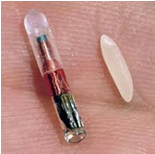 A microchip allows your cat to be identified and returned to you should he/she become lost or stolen. The microchip is around the size of a grain of rice and is placed by an injection under the skin in the back of the neck.
– Contact the surgery to arrange to have your cat microchipped
Worming
– Cats can become infected with worms through their mother’s milk, the environment and through eating infected fleas, mice or birds.
– The vets will be happy to advise you on a suitable worming regime for your cat based on its lifestyle
– Worm eggs can be found on your cat’s coat so it is important all family members wash their hands after handling the cat.
- Pet Insurance
– Pet insurance offers pet owners a means of affording the best possible care for their animals, in a world where the options in terms of diagnosis and treatment of diseases is advancing rapidly.
– There are numerous companies offering pet insurance, so it is important to do your research and check your policy offers a level of cover you are comfortable with.
- Neutering
– Neutering can be carried out from 4 months of age.
– Neutering prevents female cats from producing unwanted litters of kittens (cats can become pregnant as early as 6 months old).
– In male cats neutering can help prevent spraying in the house; reduce the likelihood of your cat getting into fights with other cats and make it less likely your cat will roam and go missing.
For any further information contact Tain surgery 01862 894223 or Invergordon 01349 854981